Choosing between Vanguard's VOO (S&P 500 ETF) and VTV (Value ETF) requires careful consideration of your investment goals and risk tolerance. This guide provides a clear comparison to help you make an informed decision.
Understanding VOO and VTV: A Side-by-Side Look
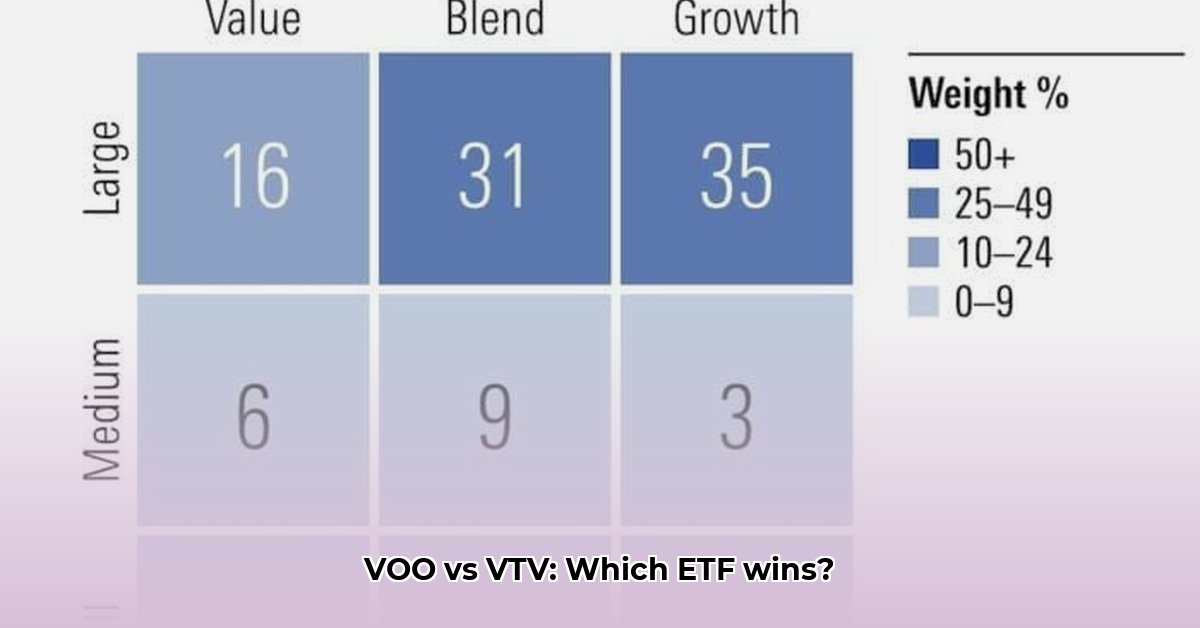
VOO tracks the S&P 500 index, representing the 500 largest U.S. companies. This provides broad market diversification, minimizing risk through exposure to a wide range of sectors. VTV, on the other hand, focuses on large-cap U.S. stocks exhibiting value characteristics—companies believed to be undervalued by the market. While potentially offering higher returns, this strategy carries increased risk due to its narrower focus.
Key Feature Comparison: VOO vs VTV
The table below summarizes key differences:
| Feature | VOO (S&P 500 ETF) | VTV (Value ETF) |
|---|---|---|
| Index Tracked | S&P 500 | Value Weighted Large-Cap US Index |
| Expense Ratio | 0.03% (as of 1/15/2024) | 0.04% (as of 1/15/2024) |
| Dividend Yield | Lower (1.43% as of 1/15/2024) | Higher (2.40% as of 1/15/2024) |
| Volatility | Generally Higher | Generally Lower |
| Sector Allocation | Diversified across many sectors | Concentrated in value-oriented sectors |
| Investment Style | Growth | Value |
Risk Assessment: Navigating the Investment Landscape
VOO's broader diversification generally leads to lower volatility compared to VTV. However, this comes at the potential cost of lower returns. VTV's concentrated approach in value stocks may offer higher potential returns but also increased risk of significant price fluctuations. The "riskier" choice depends entirely on your individual risk tolerance and investment goals. Are you comfortable with potentially higher short-term volatility for the chance of larger long-term gains, or do you prioritize stability and lower potential upside?
Investment Strategy Guidance: A Step-by-Step Approach
Choosing between VOO and VTV involves a personalized strategy built around your unique financial situation:
Assess Your Risk Tolerance: Are you comfortable with potential short-term losses for the chance of higher long-term returns? A higher risk tolerance leans towards VTV; a lower tolerance suggests VOO.
Define Your Investment Timeline: Short-term investment horizons (under 5 years) generally favor VOO's lower volatility. Longer-term horizons (10+ years) may allow for VTV's higher-risk, higher-reward potential.
Consider Your Portfolio Diversification: How does this choice integrate with your existing investments? Avoid excessive concentration in similar asset classes. If your portfolio is already heavily weighted towards growth stocks, a value-oriented ETF like VTV may provide balance.
Review Historical Performance: Analyze past performance data (remembering that past performance doesn’t guarantee future results). Websites like etfinsider.co provide valuable insights, but always conduct thorough research before making any investment choice. Consider reviewing performance data over varying timeframes; short-term fluctuations may not provide an accurate representation of long-term trends.
Seek Professional Advice: Consult with a qualified financial advisor before making any investment decisions. This ensures your strategies are personalized to your circumstances.
Conclusion: The Right ETF for Your Financial Journey
The "best" ETF—VOO or VTV—depends entirely on your individual risk profile, investment horizon, and broader financial goals. VOO offers stable, diversified exposure to the broad market, while VTV provides a potentially higher-reward but riskier approach through a focus on value stocks. Use this guide as a starting point for your research, but remember that thorough investigation and professional advice are crucial before investing. All investments involve risk, and you may lose money.